Slowing Down for Love
I arrived at the Sri Ram ashram—Mount Madonna’s sister organization in Haridwar— exhausted and ready to lie down and rest. The second I stepped off the bus, however, my weariness disappeared and was replaced by warmth and a peaceful alertness.
Let me explain. I’m still not—and don’t think I ever will be—used to the greetings we receive in India, especially from the children. With each new meeting, shock jolts through my body at the unconditional love, admiration, and interest with which we are greeted. Every time we are accepted by new people I feel momentarily uncomfortable and undeserving, and then viscerally grateful. I’m accustomed to a culture of judgement, cliquiness, and social anxiety; my fear of social interaction and strangers runs deep. This fear has chased after me as I embark on this journey. Because of this reality, each welcome I’ve received has been deeply emotional for me. I can almost physically feel my brain chemistry being challenged.
So, returning to that moment exiting the bus on our first afternoon at the ashram, you can imagine how I snapped into a charged wakefulness in response to the most magical greeting we’ve had yet. The weight of my exhaustion and the luggage on my shoulders seemed to lift as a tiny hand grabbed onto me and pulled me down the steps towards a gaggle of smiling faces.
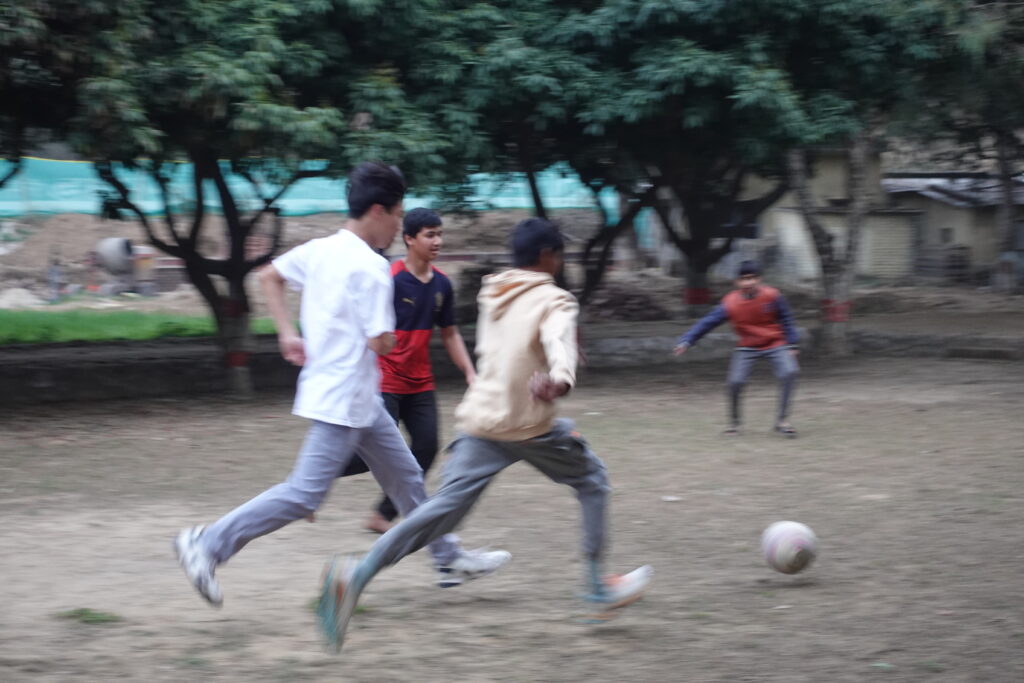
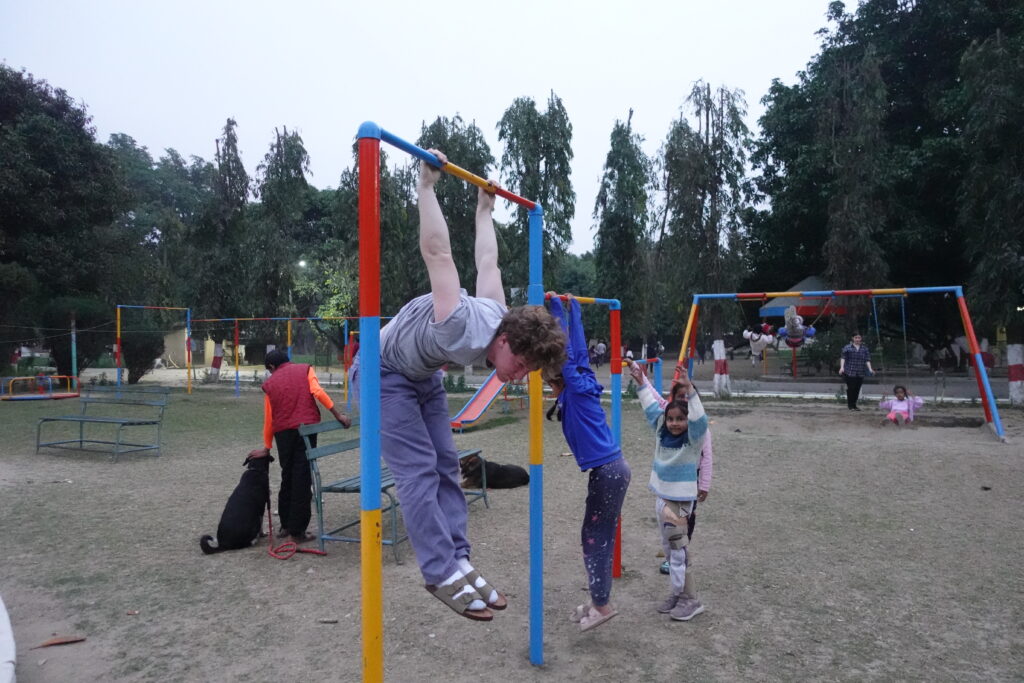
Many of the young children speak to us in Hindi, so we communicate through body language, smiles, and play. Though for the most part we can’t understand one another, we share a few words: “how was school?” “Good!” Or “Didi, come play!”
Didi is the Hindi word for big sister, and it is how the young kids address the girls in our class. After hearing this word echoing around me, summoning me, for only a short day, I became as responsive to it as I am my own name. Each time I hear a joyful little voice call “didi!” from behind me, my face is fresh with smiles at the realization that I am being addressed, and I happily allow myself to be pulled this way and that.
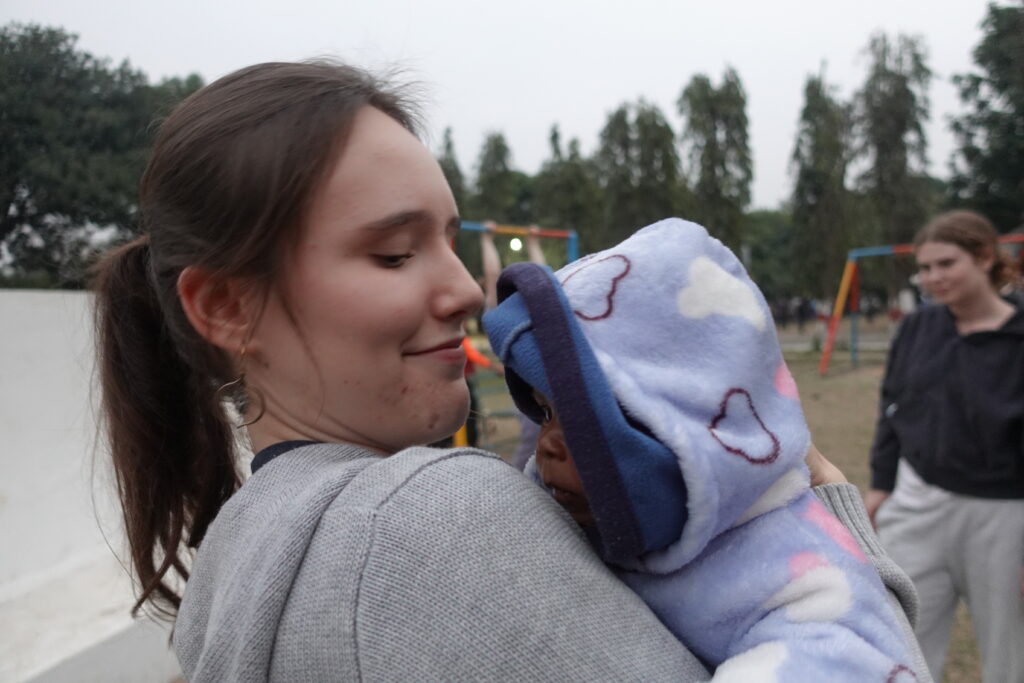
The most meaningful part of being at the ashram for me is spending time with the babies. My idea of a perfect day is genuinely just holding a baby. I never get tired of being with them (even when I am covered in spit-up). At home, I don’t have many opportunities to spend time with babies, so I am soaking-in every moment.
Holding a baby is a form of meditation. One cannot help but be present in the moment, feel connected and slow down. Being accepted and loved by the babies and the children is showing me that I can be both empowered and humbled at the same time. This is a radical feeling.
A Deeply Foreign Encounter
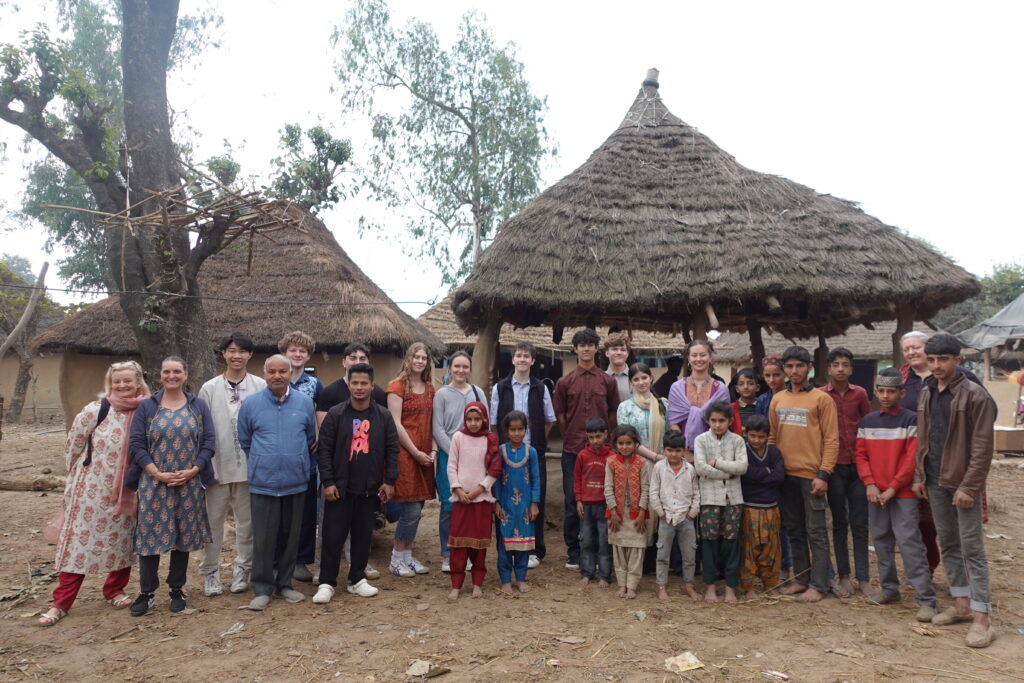
Today, the day after arriving at the joyful and comfortable Ashram, we took a bumpy trip on a tractor to a village populated by Gujars. The Gujars are a group of people, formerly nomadic, who took refuge from Afghanistan in India and are funded by the government to live in accordance with their traditions. In this case, the Gujjar people live simply, building their own houses and making money by selling buffalo milk.
When first arriving, I instantly noticed their huts, which were built of straw and stone. The straw that is used on the roof is waterproof and is stacked in a certain way in order to protect from rain. One of my main questions was how one decides they want to live a life like this. For the Gujar people, you are born into this lifestyle. Men are able to go to school, but often they choose to stay home and work. Women have to stay home.
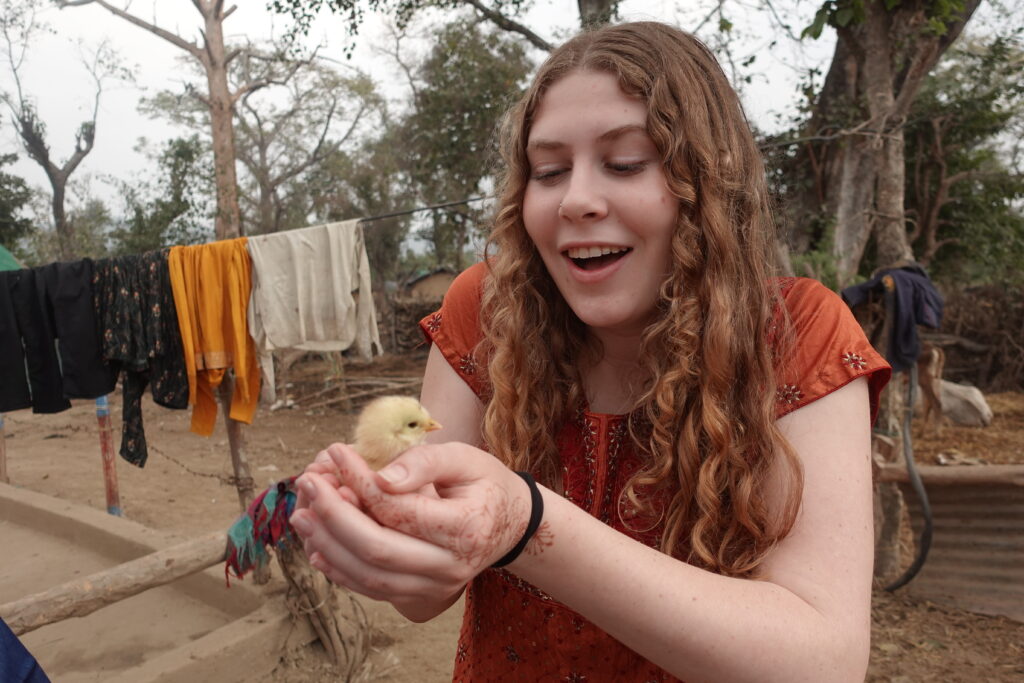
Another thing I wanted to know about was if they ever create art, whether that be dancing, singing, painting, etc. They answered that they do not have a creative outlet. We also asked if they engage in play, and they shook their heads. One of our chaperones had a theory that their lifestyle is art in itself; building their houses by themselves, some painting the inside a beautiful blue with red accents, and adding structural additions like special-shaped windows. Raising animals from their first breath to their last seemed like play to us as we watched them with their baby cows and water buffaloes.
Our trip to this mud and thatch village was fascinating, and I will never forget the Gujar people.

Meeting through a Language Barrier
Your understanding of places shifts entirely once you stop seeing them as a destination or an item on an itinerary and instead choose to see the people who live there. Today we visited a Gujjar village on the first day of Ramadan. The entire village consisted of the extended family of four brothers from Afghanistan, sharing land, but more than that, sharing a way of life.
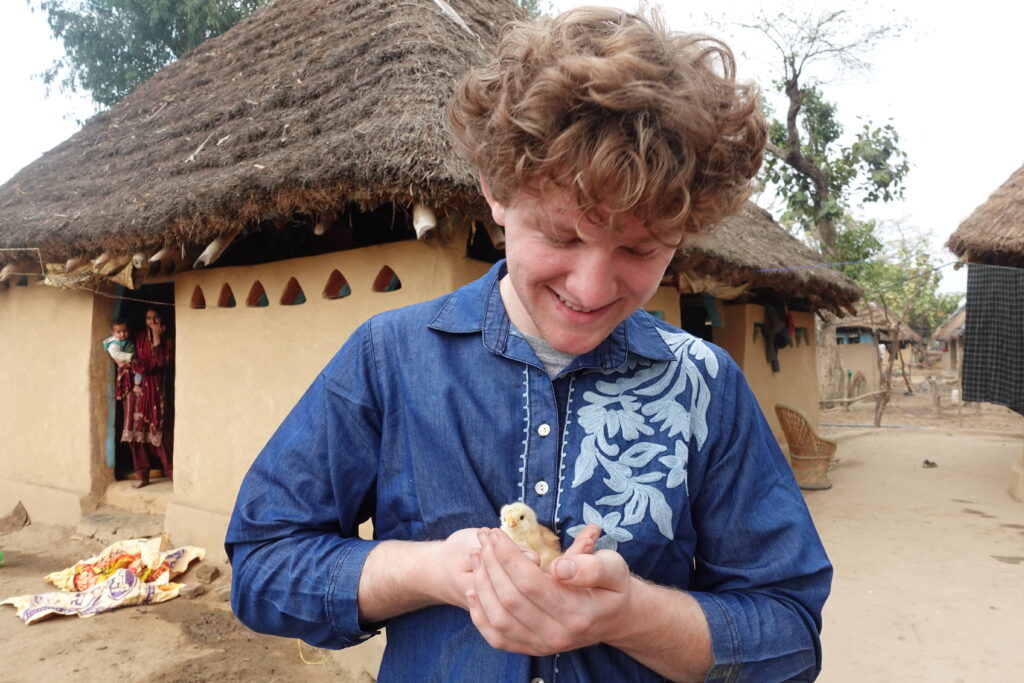
Their world revolved around the simple things that many of us take for granted. Building a roof takes the whole village, and because of that, it takes far less time than you or I might expect in America, as the community comes together with a quiet sense of kinship to get what needs to be done, done. A chaotic flock of chickens, dozens of buffalo, and humble goats were the only companions they seemed to need.
What immediately struck me was how self sufficient everything felt. When a house needs to be rebuilt, they do it themselves. No contractors and no delay, just a hard day’s work. This made me realize how different independence looks when it is not a choice but simply the reality you live in.
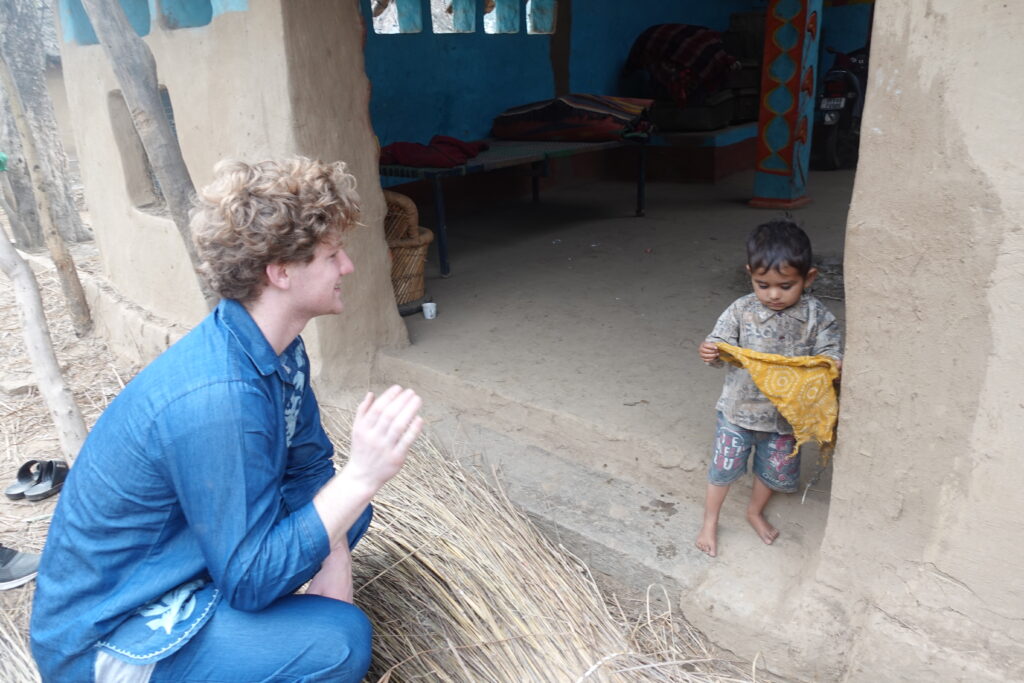
Despite our differences in lifestyle, what stood out was not hardship or sadness, but warmth. Every interaction I had was filled with kindness and curiosity. Language barrier aside, curiosity and the willingness to welcome us never felt forced, only genuine. I left realizing that while nearly everything about their daily life felt unfamiliar to me, the sense of family, pride in their work, and quiet generosity felt completely universal.