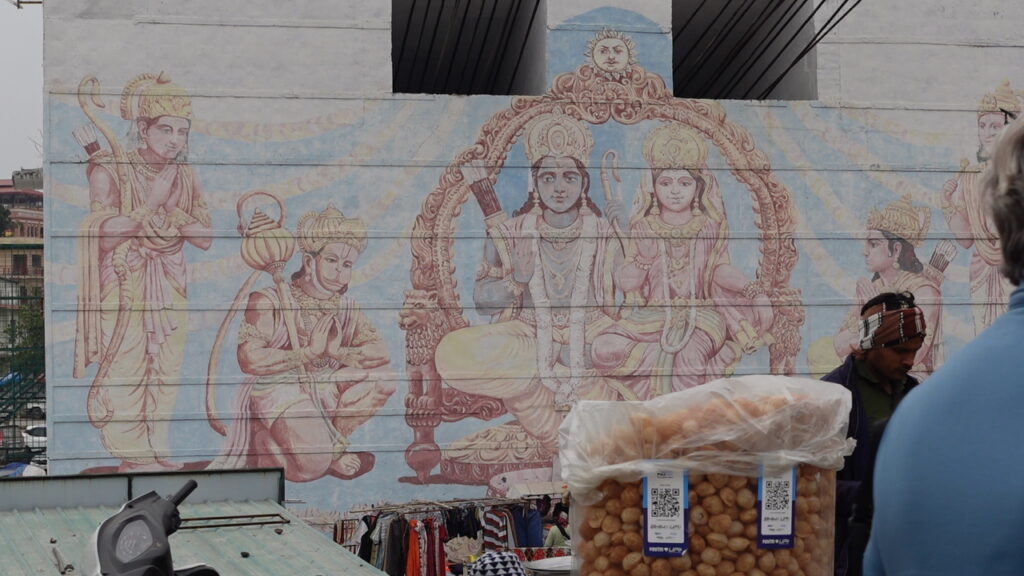
A Moment To Breathe
The Beatles ashram is where the Beatles lived for a month in 1968 to learn transcendental meditation from Maharishi Mahesh. During this time they also wrote most of the white album. We stopped on our way from Dehradun to Haridwar in order to visit this historic place.
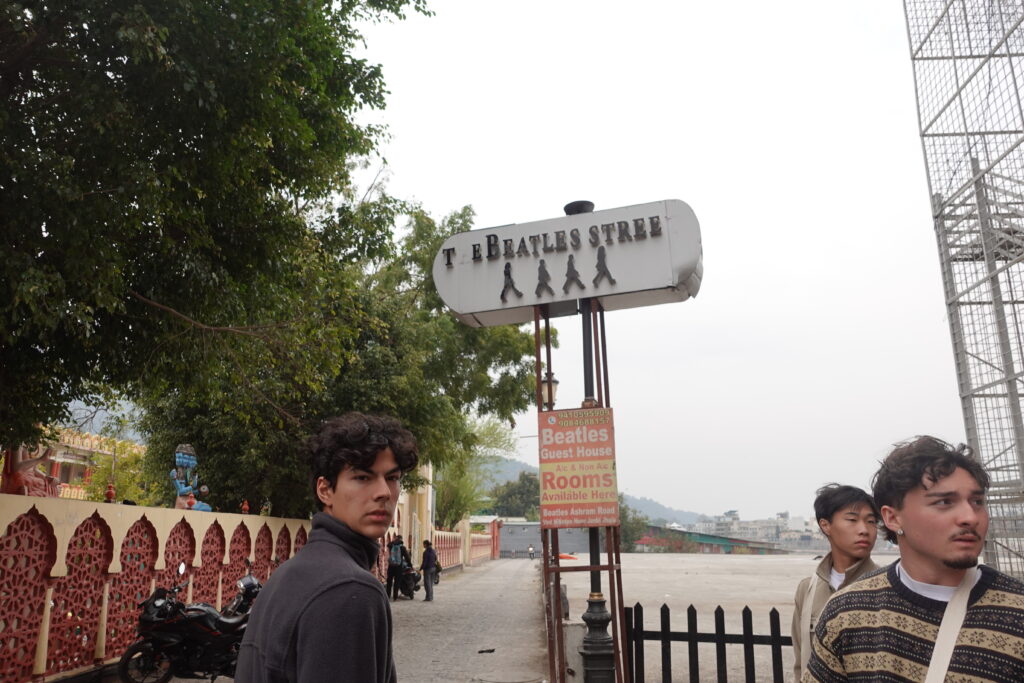
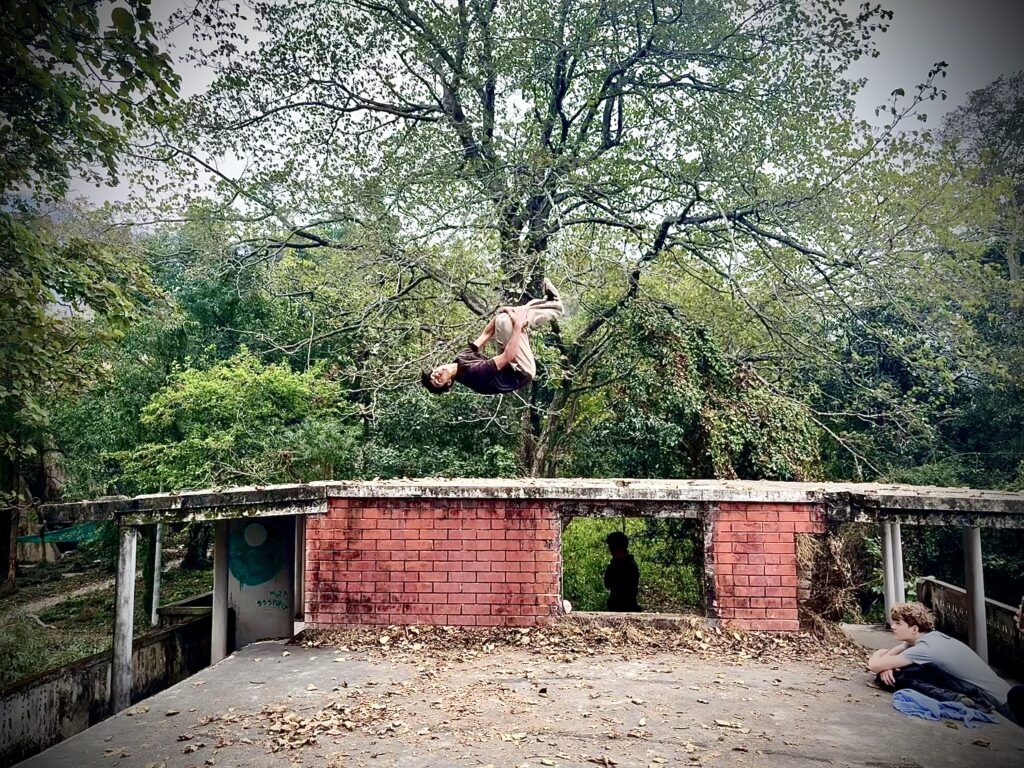
The ashram itself is old and falling apart a bit. It has incredible graffiti artwork on its crumbling walls, which I think is what gives it its authenticity and is what makes it so special. Right now they are in the process of remodeling and they are fixing all of the buildings and painting them all white which is incredibly sad, in my opinion. What makes the ashram so cool and unique isn’t just that the Beatles lived there, it is that they left their mark in the form of art and expression in all of the unique and incredible buildings.
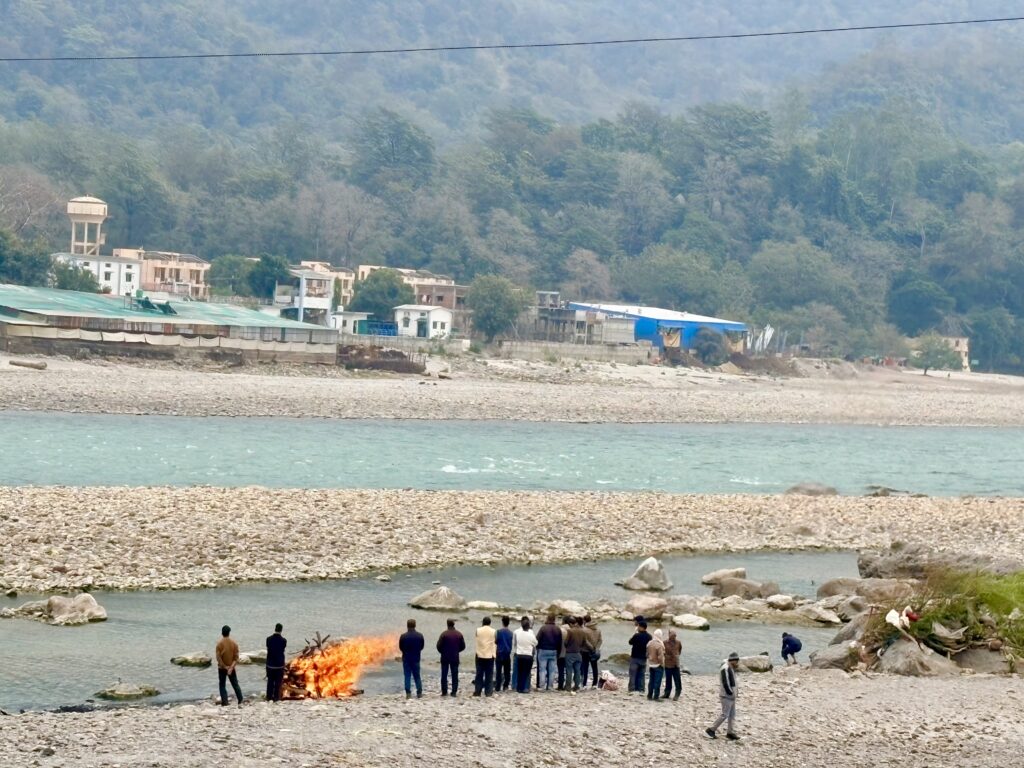
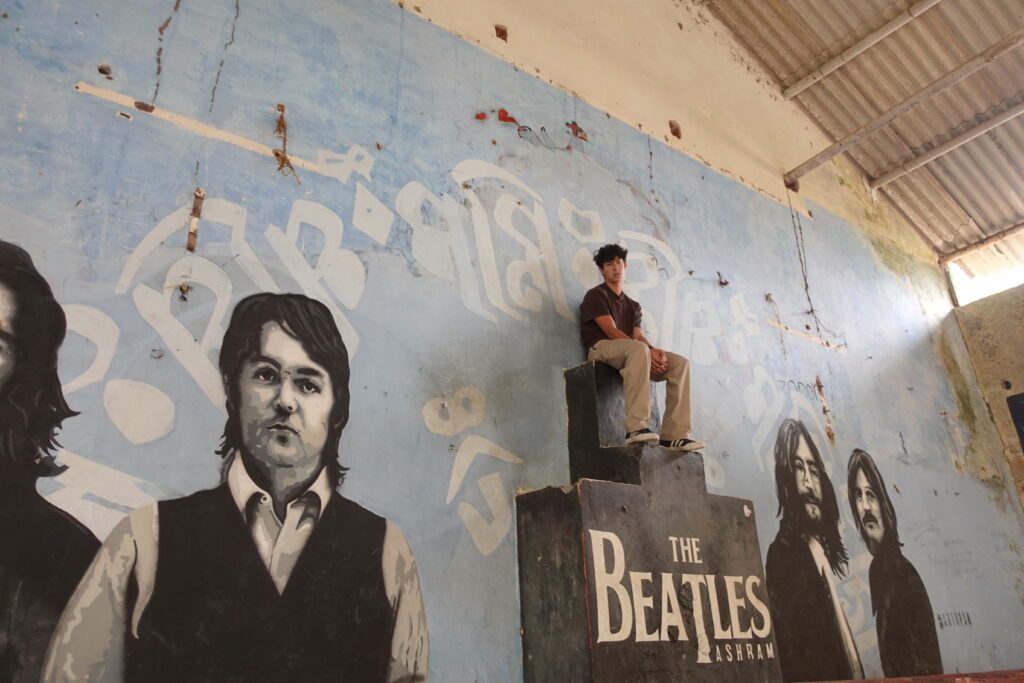
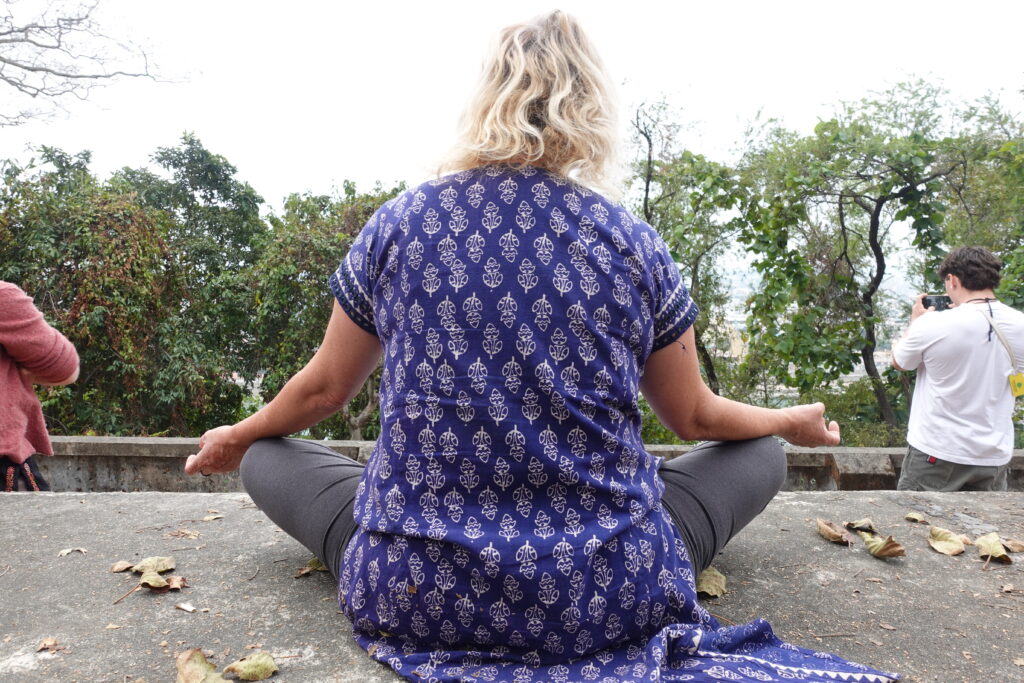
The Beatles Ashram was impactful for me for an entirely different reason. After exploring and admiring the artwork, Chelsea took Mateo, Lucy and I to the roof of one of the buildings which had a view of all of Rishikesh and the river Gunga. We then spread out on the roof and did a five minute silent meditation. I thought, at that time, that I had felt India and I was fully here and experiencing everything that I could, but during that meditation I finally got a chance to breathe and just be. After we finished the five minutes I finally felt like I had arrived. I felt like I was actually in India for the first time. Before the meditation I was just going from one thing to the next and I was trying so hard to experience all the things that were available, but in that meditation I got a chance to pause and really feel the difference. I am so grateful that I got the opportunity to really connect with “mother India” in that way.

Ticket to Ride
After traveling so far that it feels like we have gone across the universe, I was particularly excited for one stop: the Beatles ashram. We learned today that the word “ashram” means to come, to leave, and to learn. This is what the Beatles hoped to do in India. In 1968, the Beatles spent several months in Rishikesh with the intention of learning about spirituality and practicing Transcendental Meditation, a technique introduced by Maharishi Mahesh Yogi over sixty years ago. While here, the Beatles also wrote the majority of their White Album. Now, the Beatles ashram is a popular attraction that houses murals, historical information, meditation huts, beautiful graffiti, and years of history. The Beatles are one of my favorite bands, and after watching a documentary about their time in India, I could hardly contain my excitement at the opportunity to visit this incredible site.
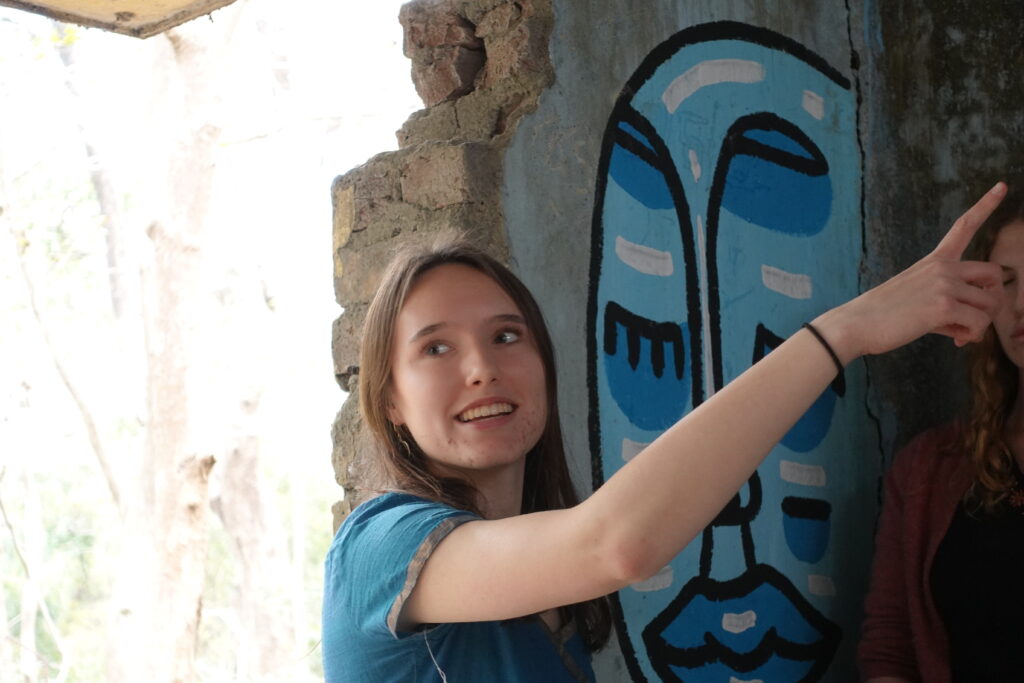
This morning, after many a long and winding road, we finally arrived in the beautiful village of Rishikesh, right on the river Ganga. We walked across a windy, motorcycle-packed bridge and completed a short trek along the water and up the hill into the entrance of the ashram. Amazed, I studied old photographs from the Beatles’ time here, and read about Maharishi Mahesh Yogi and the benefits of Transcendental Meditation. I admired murals, added my name to a wall of graffiti, and explored underground rooms and old rooftops that overlooked the Ganga. I would gladly have spent all day in this sprawling, beautiful landscape, full of old buildings and artwork here there and everywhere, waiting to be explored.
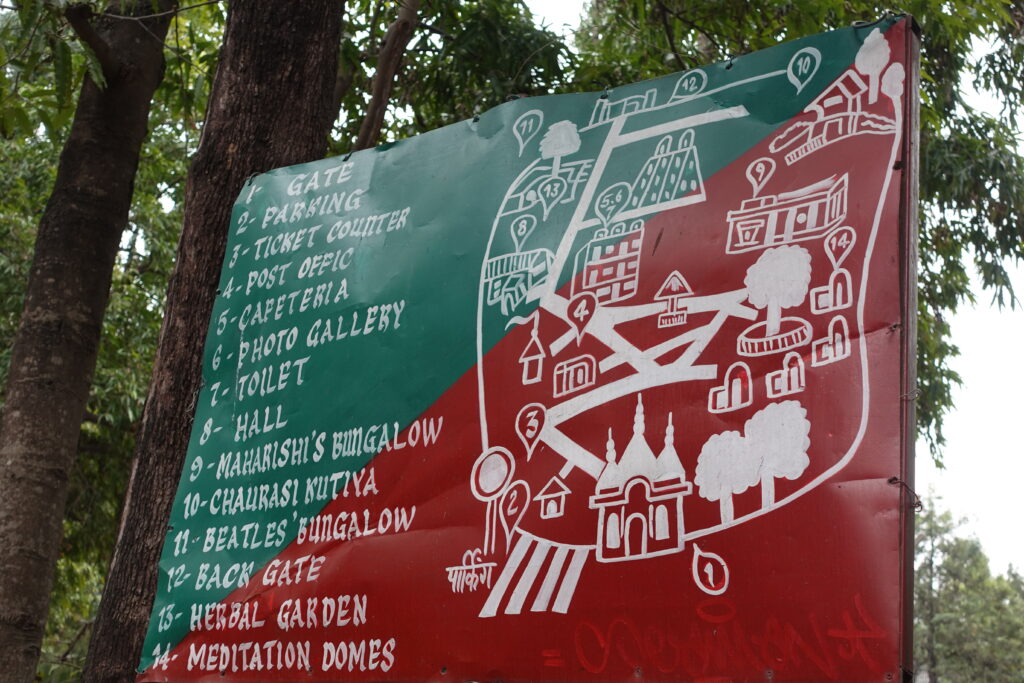
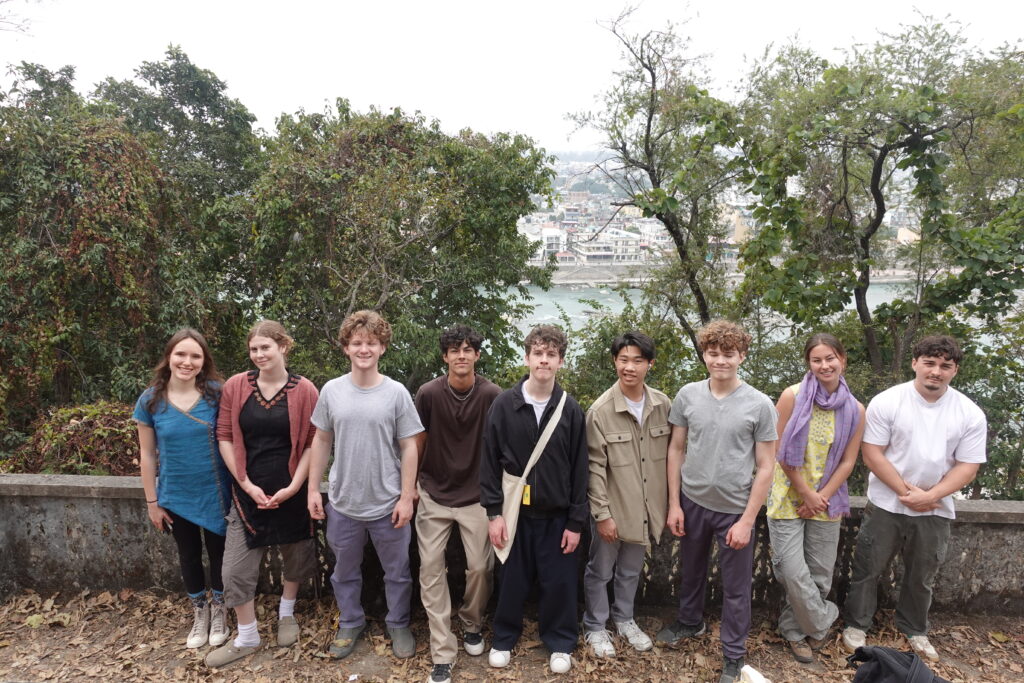
The ashram is currently undergoing renovations, and may very well look different by next year. Even despite this construction, we had much more ground under us than we could cover in our time, so unfortunately, we had to say “hello, goodbye” to the ashram and continue on to our next exciting stops.
Do you want to know a secret?
Money can’t buy you love, love but it can get you a trip to India to visit the Beatles ashram!

A Dazzling Shopping Trip
Yesterday we visited Rishikesh. One of the things we did was go shopping in an alley that had lots of different shops. There were some similarities to shopping in the states, but most of it was so different. There were so many people and motorbikes; you would have to walk through a sea of people without losing your group while remaining aware of the motorbikes and cows all around. It sounds very extreme but it was actually fun and felt safe. It is still a crazy experience for an American and one I enjoyed very much.
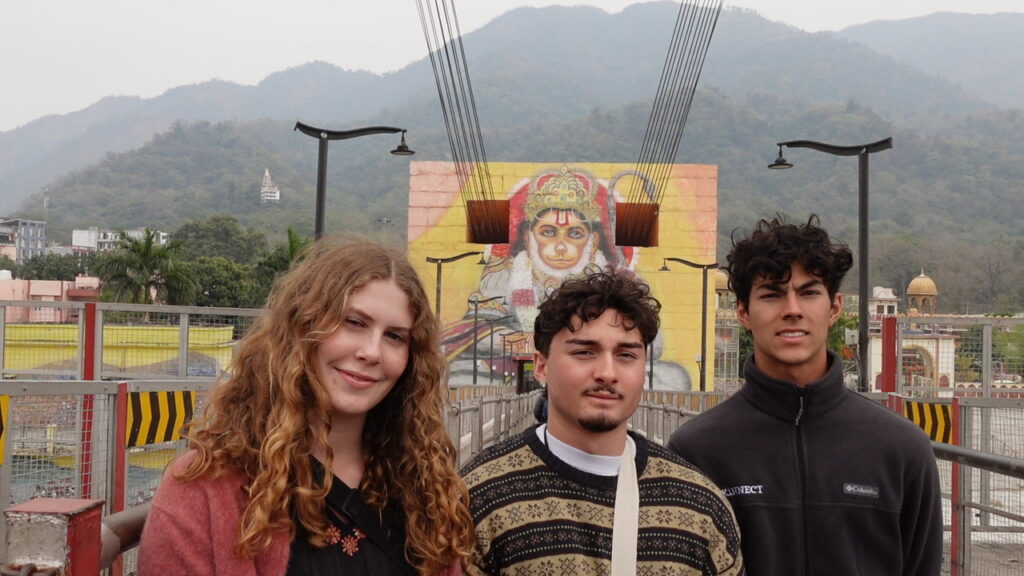
If you know me, I have a bit of a shopping addiction. I found it difficult not to buy everything that I saw, especially when you see some of these prices. I realized that I could buy some nice pants for two to four dollars. There was novelty everywhere and so many things I had never seen. I got a nice bracelet for a dollar. We also have other places to shop so I had to save. Although I was able to contain myself to some degree on shopping I did visit almost every store I saw because it was mandatory. One of the stores my group went into was a jewelry store and these silver earrings caught my eye. Soon enough I saw a really beautiful silver bracelet and I knew I wanted that, so I asked for the price. He said three hundred seventy five U.S dollars and I didn’t even want to bother haggling because there was no point! Some things are shockingly expensive. I bought the earrings instead. The moral of the story is that not everything in India is inexpensive. Lastly, if you ever find yourself in India and shopping in an alley watch out for cows and also make sure you buy some of the lightweight linen pants because they are so comfortable and they cost four dollars. I really enjoyed the shopping experience.
Everyone is a Guru
Human beings are social animals. Like our fellow primates, we need our groups to survive and thrive. Our binocular vision and large occipital lobes can do the calculus required to reach up and catch a ball as it arcs through the air instantaneously, but we are only registering a few points of visual recognition. When we look at a human face, we register over three hundred points so that we see, and analyze, reactions with great depth.
Baba Hari Dass taught that everyone is a “guru,” if you listen deeply. So often when we are listening, our minds work on formulating our response. This is a deeply protective instinct. Our survival depended on social status for such a great part of human evolution that the need to fit-in is deeply ingrained. We are listening to be seen, rather than seeing.
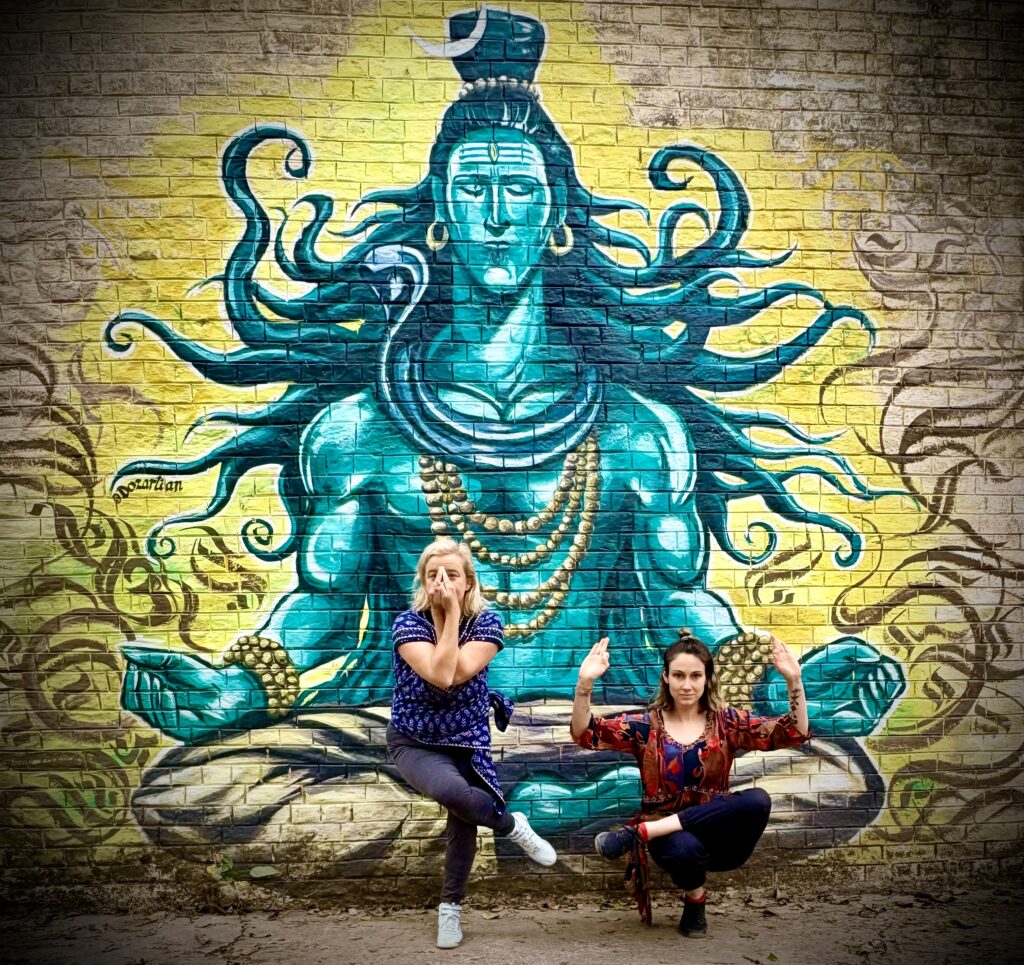
Enter the idea of enlightenment. It can happen in a snap. A perspective can be shifted forever; a person can live inside a metaphorical balloon that suddenly pops, revealing the outer world that had been obscured by a layer of translucent balloon latex. I’ve been enjoying, throughout our trip to India, watching many balloons pop as we walk across the bed-of-nails that is the carefully curated experience of the trip.
Not to compare these experiences to something painful; they are anything but that. Having been on this trip in a much earlier iteration, I have loved seeing the evolution of the shared experience. If I could encapsulate the changes in one word, the word would be Love. A greater love and tender caring for our students, for the people we meet, and for our very bodies has refined the education being offered on the road. The organizations we visit now were born from pure love, from seeing a hole in the world, and filling it with love itself.
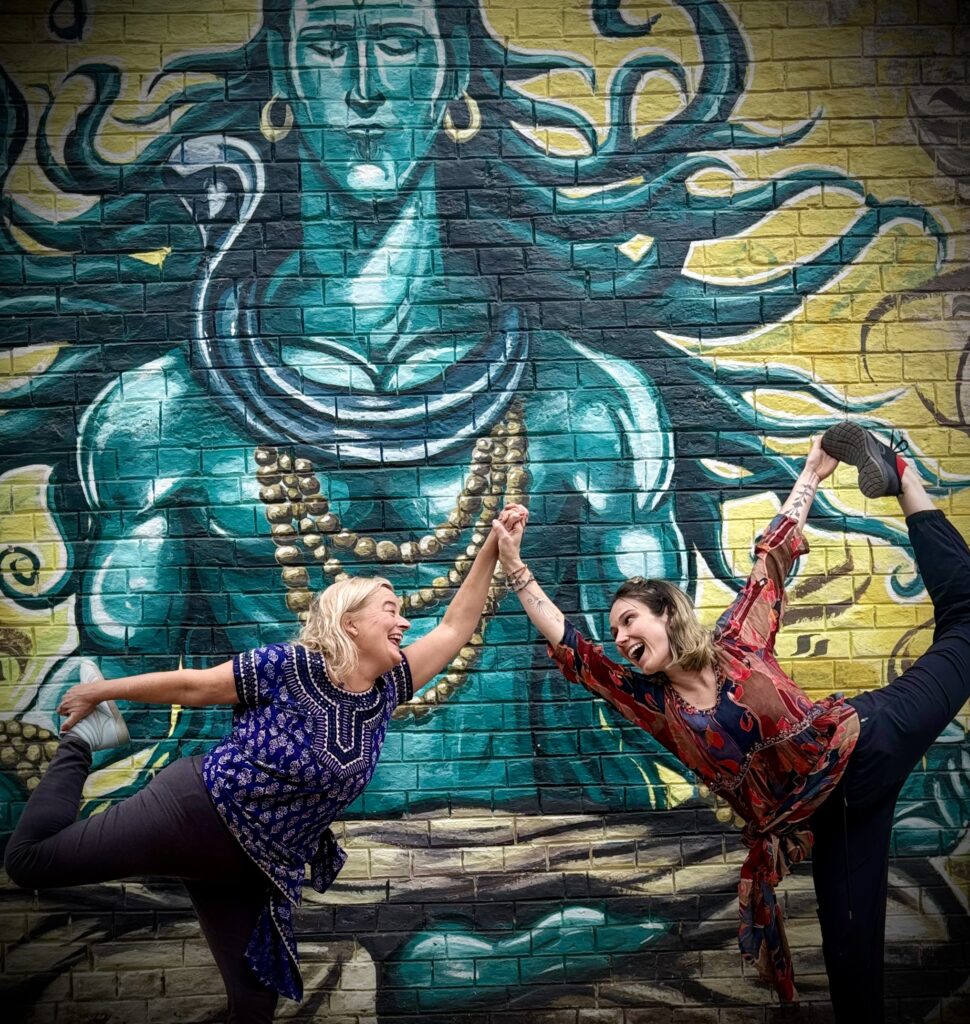
Every time we are at the doorstep of a new organization, Chelsea does not hesitate to remind us that everyone is a Guru, if you listen deeply. Irrespective of language, I’ve been spending this week learning about the world through the smiles of children from a vibrant tapestry of cultures and experiences, including the MMS students who travel by my side. Our days can easily be described by our other favorite Babaji advice for life; work honestly, meet people without fear, meditate every day, and play.
This morning I greeted a smiling baby in the arms of a Gujar cattle herder in a small village built from mud and thatch. The baby loved my glittery manicure and spent a good long time teething on my fingers. With no common culture or language, I enjoyed a smiling “conversation” with the parents of the village about teething, and babies. A balloon popped for me about the universality of love, generations, and the rites of passage that carry through every culture and circumstance of life all over the world. Shared humanity is our greatest teacher.