
Choice and Sacrifice
The U.S. abolished slavery in the late 1800s, following Britain’s earlier lead. Japan dismantled its rigid feudal system during the Meiji Restoration, and the taking of thralls had largely faded out by the 14th century in Scandinavia. All around the world, generations have passed since we collectively rejected overt involuntary servitude. Of course, we still have broad steps to take, with unpaid labor in foreign affairs, as well as labor exploitation and predatory supply chains, not to mention the prison industrial complex in our own country. Nonetheless, most modern societies say that humans should have the opportunity to choose the course of their lives, no matter the situation in which they were born. Legal freedom, however, does not always translate directly to practical freedom. In South Africa, Apartheid was abolished in the 90s, yet an incredible amount of social and economic disparity exists today. Although leaders there and in other countries have tried to address the problems that are relics of colonialism, well-meant actions often have a way of getting in the way of their desired effects. Good intentions, however, seem to outweigh bad ones, all across the world in this age. Today, most restrictive environments are not ones enforced by law, but those brought about by one’s gender, race, devotion, wealth, or by other social factors. While different, the chains that these labels hold are just as binding as when they were mandated by law.
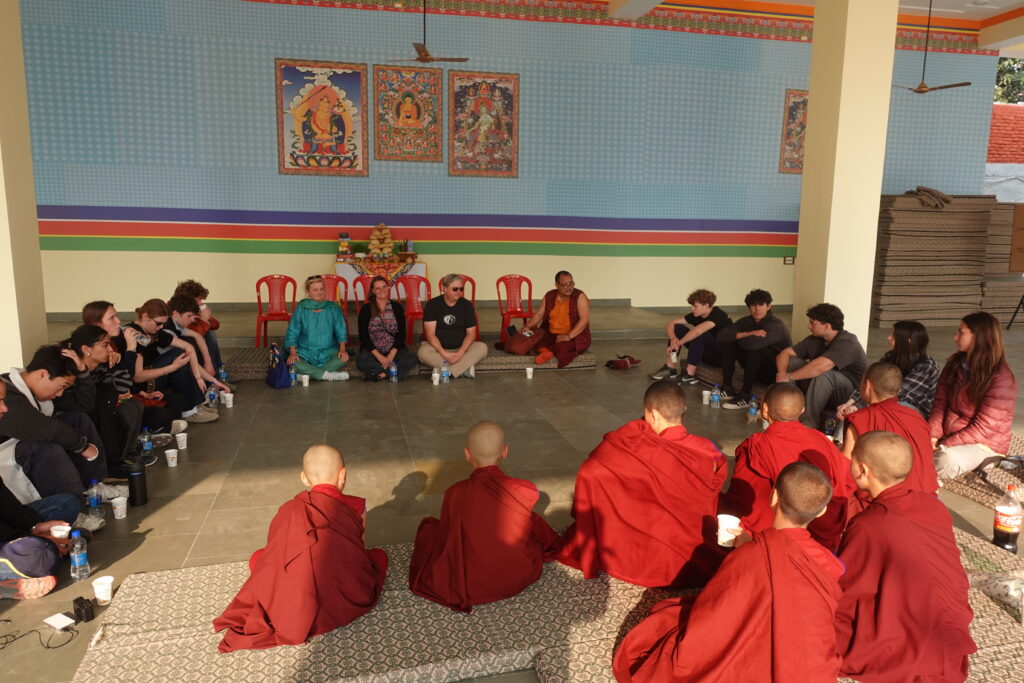
My thinking was immediately drawn to these ideas last night when we visited two Tibetan Buddhist nunneries. We were first introduced to a sprawling monastery of unbelievable cleanliness that was only rivaled by the natural beauty surrounding it. We were immediately met with astounding kindness and showered in food and blessings, an aspect of the eastern mentality I will never stop appreciating. In fact, I am in awe of it. We then sat down and, by means of translation through Lama Tenzin, were able to have meaningful conversations with resident nuns.
Yesterday was a special day because it was the eve of nine women attaining the incredibly important title of Geshema, 25 years in the making. They have meditated, studied, practiced, tested, and prepared for 25 years of their lives so that they could achieve a role so rare and difficult to have. Women gained the right to attain this degree in 2013; previously, they were forced to show deference to male monks no matter the difference in rank.
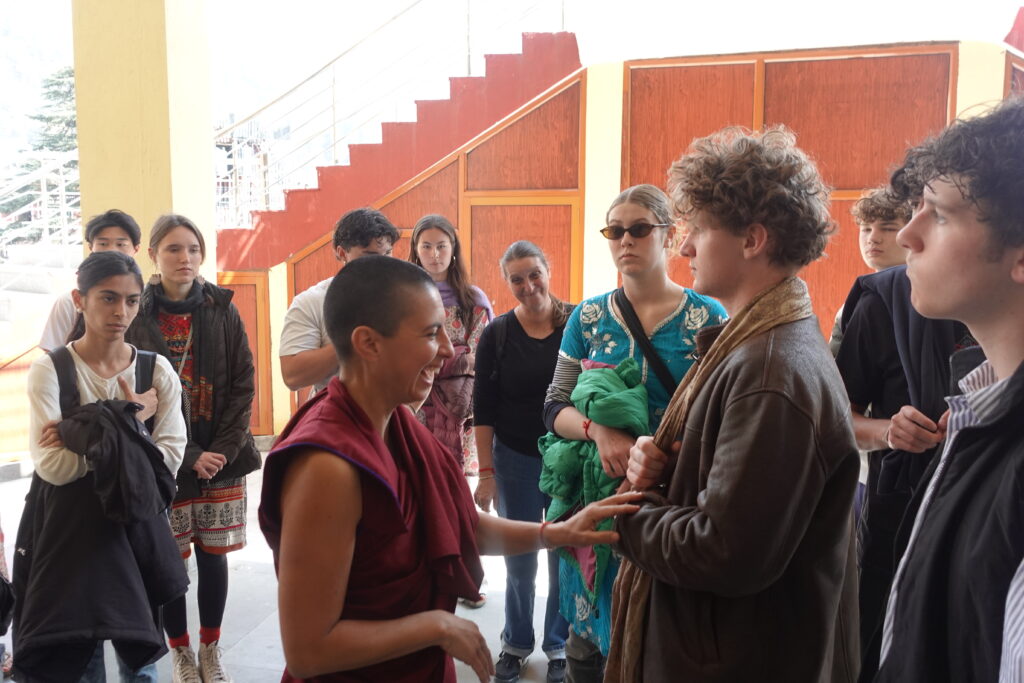
The strides in progress they have made since then have been astounding. They are now allowed to sit for the same rigorous exams, to be recognized in the Buddhist institution, and to have the historic opportunity to be recognized as Geshe. His holiness the Dalai Lama helped remove obstacles that blocked nuns from attaining high ranking positions and degrees.
I noticed, however, that although there has been a considerable amount of progress in all aspects of a Buddhist nun’s life, there are issues I cannot overlook. The curator of our journey for our days in Dharamsala, Lama Tenzin, has been illuminating the injustice and challenges that befall the women in the Himachal Pradesh. Both monks and nuns alike take a vow of poverty when they join, giving up all of their money and possessions and donating them to the cause. Whether they are the age of elementary school or well into their adult lives, monastics renounce their personal ownership and all accumulation of wealth. With rare exceptions, monastics are not given salaries or payment, but rather simply have their room, board, and base needs taken care of. This leaves them with no way to accumulate any sort of savings. The sacrifices both monks and nuns make are impressive. The devotion it takes to wear the same clothes every day of your life, shave your head, renounce your femininity, and devote your life to your religion is of a caliber I have never even heard of in the West. To say I am impressed is an understatement.
However, these nuns come at a very early age, many of them from poverty and terrible familial situations. Oftentimes a family cannot take care of them, and the children are given to the nunnery or monastery. Once there, they are removed of all of their property and assimilated into the nunnery. Given their lack of salary and monetary desires, it is next to impossible for a nun to leave once she has joined. I wonder how many of the women truly desire to be there, and how many stay only because they have no other options. No one is stopping them from walking out of the nunnery, but how can they? Without a formal education, no money, facing the brutal horrors done to women (Lama Tenzin has shared many stories of their trials and challenges, with great honesty and compassion) and no support, what would an ex-monastic do?
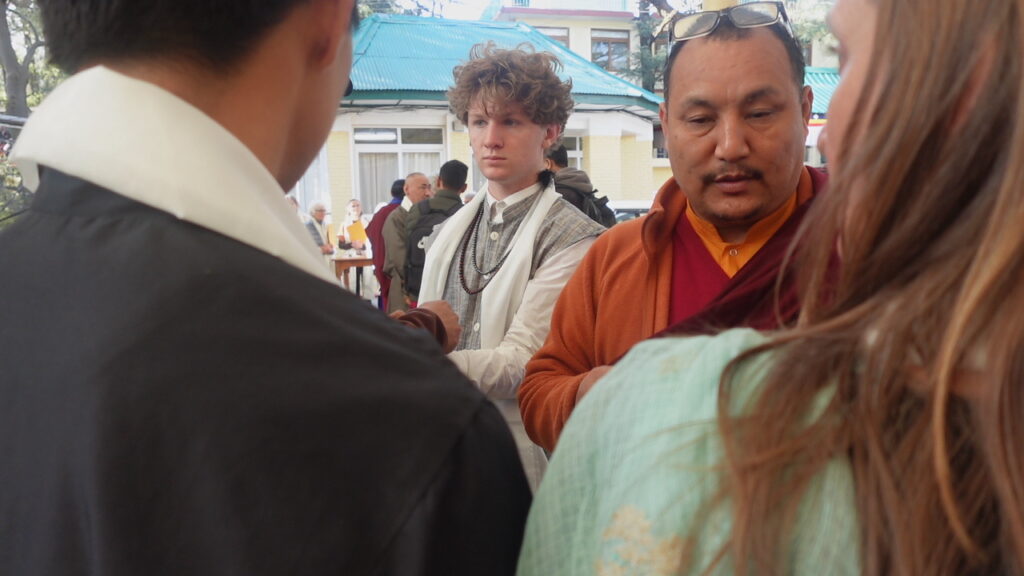
The devotion I witnessed during this trip deserves nothing but respect. The humility demonstrated by the devotees of Buddha is one of the most impressive things I will ever see. Ultimately, I cannot stop asking myself the question of how humans will manage to allow honorable, intentional, sacrifice over simply having little or no choice. For some, a monastery is a place they are called-to, somewhere they walk with conviction and honor, but for others, I ask myself if the monastic life is not just the safest path available, more enticing than begging on the street. The nuns live a life of virtue, but not one that is necessarily desired. There is a difference between giving everything and never having had the ability to keep anything in the first place. While the outward appearance of this sacrifice can look the same, the freedom behind it very well might be entirely different.

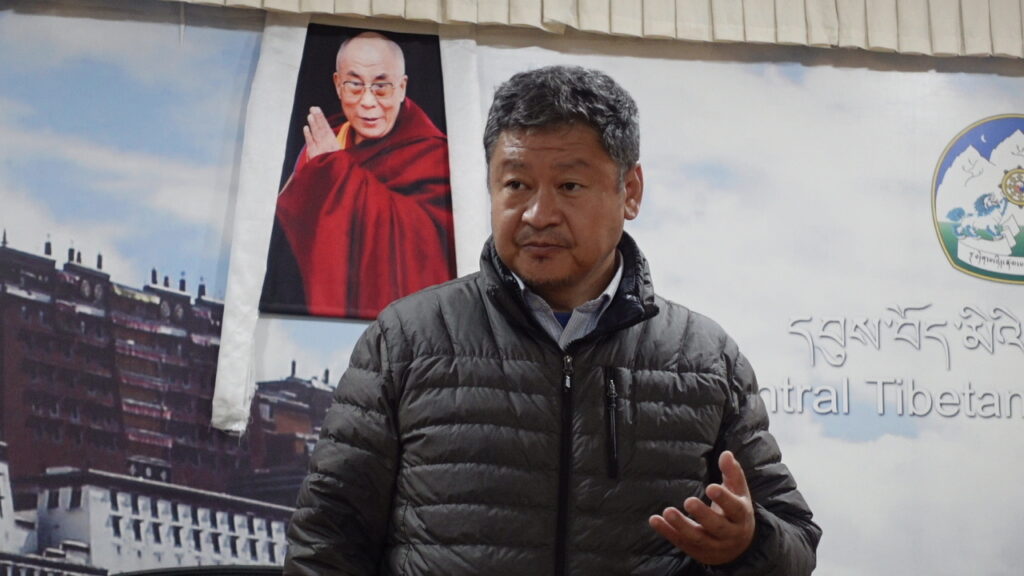
We as a class had the opportunity to visit the Central Tibetan Administration in Dharamshala. This is a government operating from exile, yet it carries itself with better organization and intention than most. We learned about how the administration seeks, as well as hopes, to include women more fully in the governing council. There was also a broader message that extended beyond policy. The focus was not only on reclaiming political standing, but on caring for people as a whole. What struck me was that this thought was not limited to the Tibetan people. Even in their dealings with China, Tibet still wished well for the people of China.
At the Tibetan Museum, the weight of history became more visible. Strong Tibetan history and hope do not simply motivate people living in exile; they provide an overarching purpose. The purpose is regaining what was lost, but also preserving what still remains. An idea that stayed with me was that the most important things for a nation may not only be land or power, but instead hopes and dreams. There was discussion of how Tibetans admire the resilience of the Jewish people and their ability to maintain identity across generations of discouragement and displacement. In some ways, Tibetans seek to replicate that enduring cultural strength.
If only people looked less for their pride, or in the seeking of one to scorn. Maybe then we could seek a more mutually beneficial outcome in our disagreements.

Peace Within Chaos
Right now I’m writing this from the quiet comfort of my bed, back in my own home; a strikingly different environment from the bustling streets of Old Delhi where I was immersed just days ago. Experiencing Old Delhi as the last stop on our incredible trip felt perfectly planned and beautifully conclusive.

For most of the trip, I had been waiting for that “India experience” everyone talked about—overwhelming crowds of people, hundreds of lives mixed together, blurs of color, wafts of smells, snatches of sounds—but we had yet to come across it in full. Finally, I got to experience this whirlwind of the senses. By then, two weeks into the trip, I was so used to India that I didn’t think twice about the strong scent of the pollution, the cows in the roads, or even the incessant honking. I felt peaceful among these things that had only briefly, in the past, felt new to me. I was ready for one final experience to test the level of this comfort that I’d developed.

I was surprised at what I found. Though I was physically aware of the information that suddenly crowded my senses as we stepped off the bus into a packed street of criss-crossing vehicles, my insides felt utterly calm. At this moment, I took time to appreciate my growth. At home, I often feel overwhelmed in crowds, or when shopping, and I am constantly worried about germs. Right before we left, I’d been overwhelmed just shopping for the trip in a Target, but somehow now I felt perfectly peaceful.
I marveled at the packed, wide street we made our way onto. It was so full of life; motorcycles close to running over your toes if you weren’t careful, vendors appearing out of nowhere to push objects in front of you, people of different religions and backgrounds dressed in different ways, speaking words I couldn’t understand.
The atmosphere was so exciting, and it all started to blur together. I wasn’t, however, in a state of overwhelm, I was in one of focus. My attention dialed into simply tracking the shirt of the person in front of me as we wound through the crowds in a constant state of brief separation, the paths of so many others meeting and breaking ours. I found this strangely meditative. Throughout India I’ve found my opportunities for meditation amidst commotion to be somehow more impactful than those for meditation amidst silence and calm. Within the chaos, our mind is turned to the present, and we are forced to focus it on something coming from one of our senses. I found that beautiful. I had learned to cope, and thrive. In this case, I was just attempting not to lose the pattern of Kyler’s purple shirt ahead of me in the crowd, instead of letting my mind drift to places that cause me anxiety and unrest.

I marveled again at the peace found in spite of the bustle of the street. There in Old Delhi, we introduced our bare feet to new germs, entered magnificent temples, and had the opportunity to learn more about the traditions of Sikhism and Jainism, which we hadn’t been able to engage with yet in India. So many vastly different lives were being led and mixed together all in one place, in a way that is a rarity in the United States’ individualistic, separated culture. The stimulating experience of Old Delhi added to the fullness and clarity of our journey and helped satisfy some of my curiosity and hunger for more as the trip came to a close. Now, in my comfortable home, as I realize that I haven’t had chai or seen a monkey all day, I start to reminisce on those crowds, the devotion, and the noise, with a sense of grateful longing.